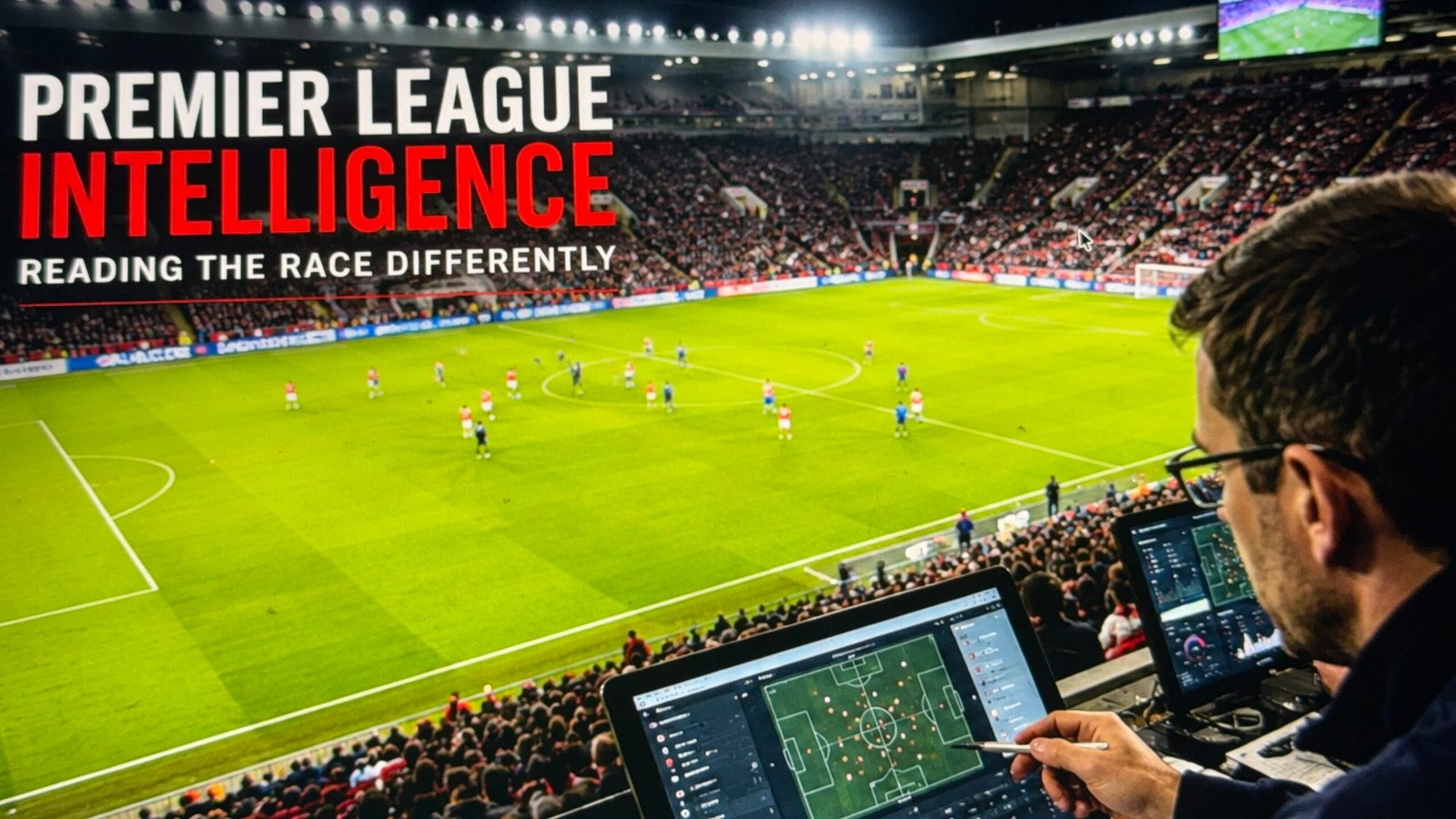
League standings do not only show points. They create pressure. A team fighting for the title, qualification, or survival often changes its tactical behavior before the match even begins.
Teams near the top often protect control differently from teams chasing from behind. A title contender may avoid unnecessary transitions, while a chasing team may press higher.
This is why standing intelligence matters inside tactical analysis.
When points matter heavily, every foul, missed chance, and defensive mistake feels larger. Momentum becomes emotionally amplified.
These pressure signals connect with match analysis and referee intelligence.
The live table below adds data context. Position, points, goal difference, and pressure zones help explain why teams behave differently.
Data shown via Sportmonks live standings. Official competition table: Premier League standings.
Under table pressure, teams often reduce risk earlier than expected. They protect central space, delay attacking runs, and prioritize stability over creativity.
Teams that need points often increase tempo and pressing intensity. This creates attacking energy but also opens transition risk behind the ball.
League standings pressure changes football behavior because teams are not only reacting to the opponent. They are reacting to the table, expectation, fear, and opportunity.
Mathic Field interprets standings as pressure structures, momentum indicators, and tactical instability zones. Position changes influence risk behavior, pressing intensity, transition control, and late-season tactical adaptation.
Point compression increases tactical volatility. Teams become more aggressive in transitions and more vulnerable under counter-pressure.
Goal difference and momentum swings reveal deeper structural trends beyond raw points accumulation.
League pressure impacts pressing behavior, possession risk, and defensive compactness during decisive phases.