Mathic Field Match Intelligence
Spain 1-0 Portugal: Tactical Match Analysis, Key Moments & Match Verdict
Spain’s 1-0 victory over Portugal was a match decided by control, patience, and one decisive attacking moment. It was not a match full of goals, but it carried the tension of knockout football from the first whistle until the final moments. Spain played with structure, Portugal searched for rhythm, and the game became a tactical battle where every mistake carried serious consequences.
This Match Analysis looks at how Spain controlled key areas of the pitch, why Portugal struggled to turn possession into clear chances, and how the result changed the direction of the tournament. The scoreline was narrow, but the match told a bigger story about discipline, timing, pressure, and efficiency.
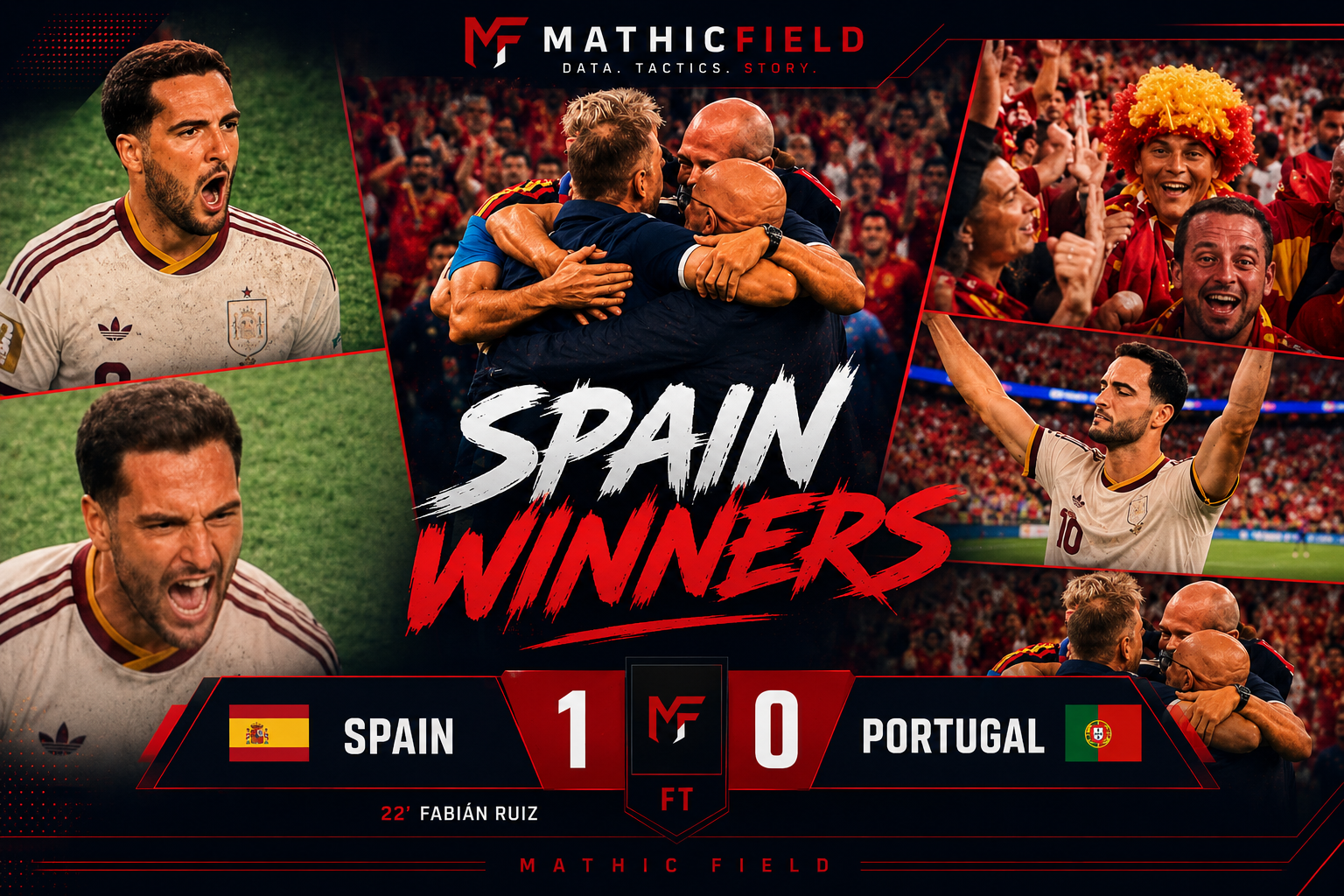
Spain 1
FT
Portugal 0
Match Summary
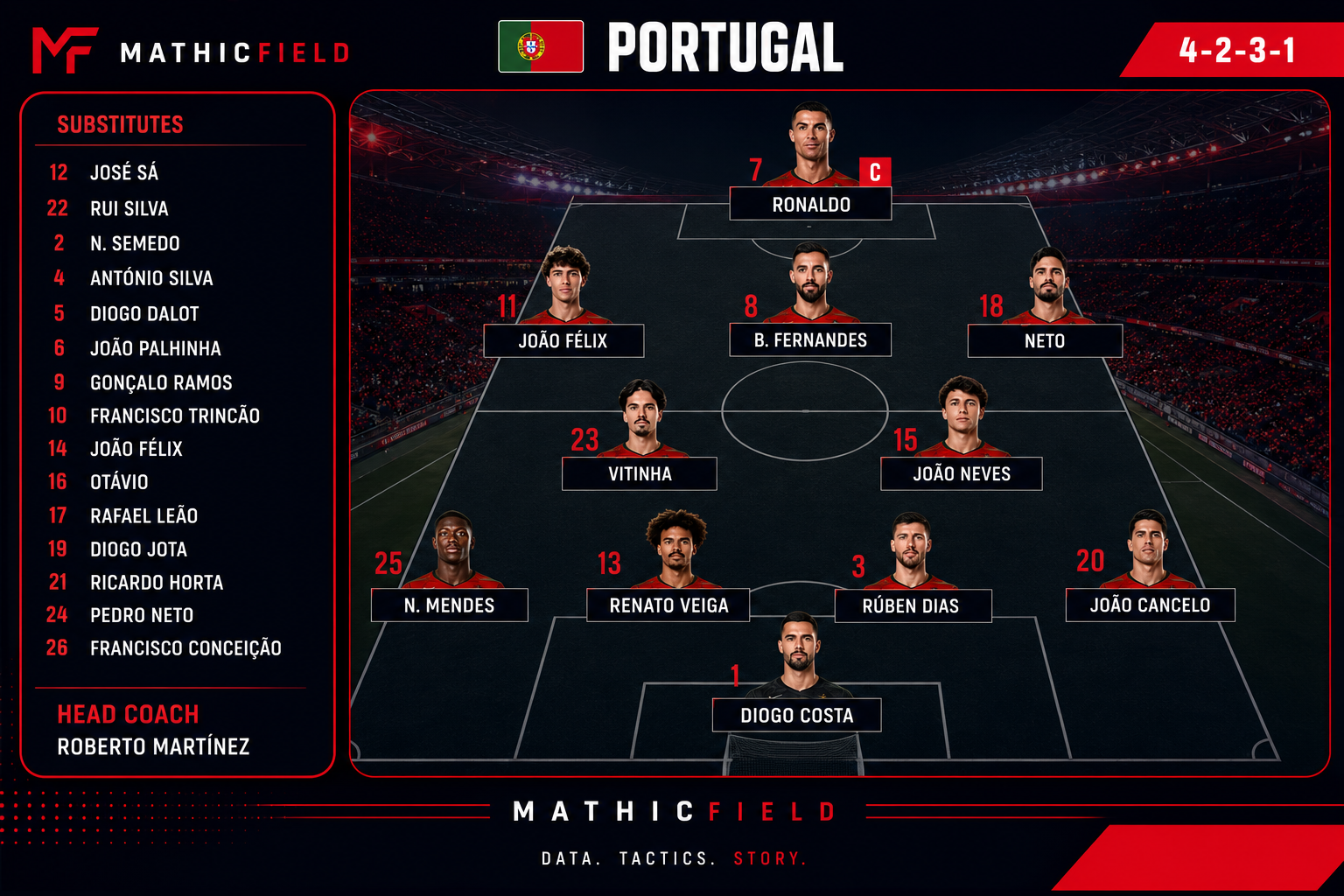
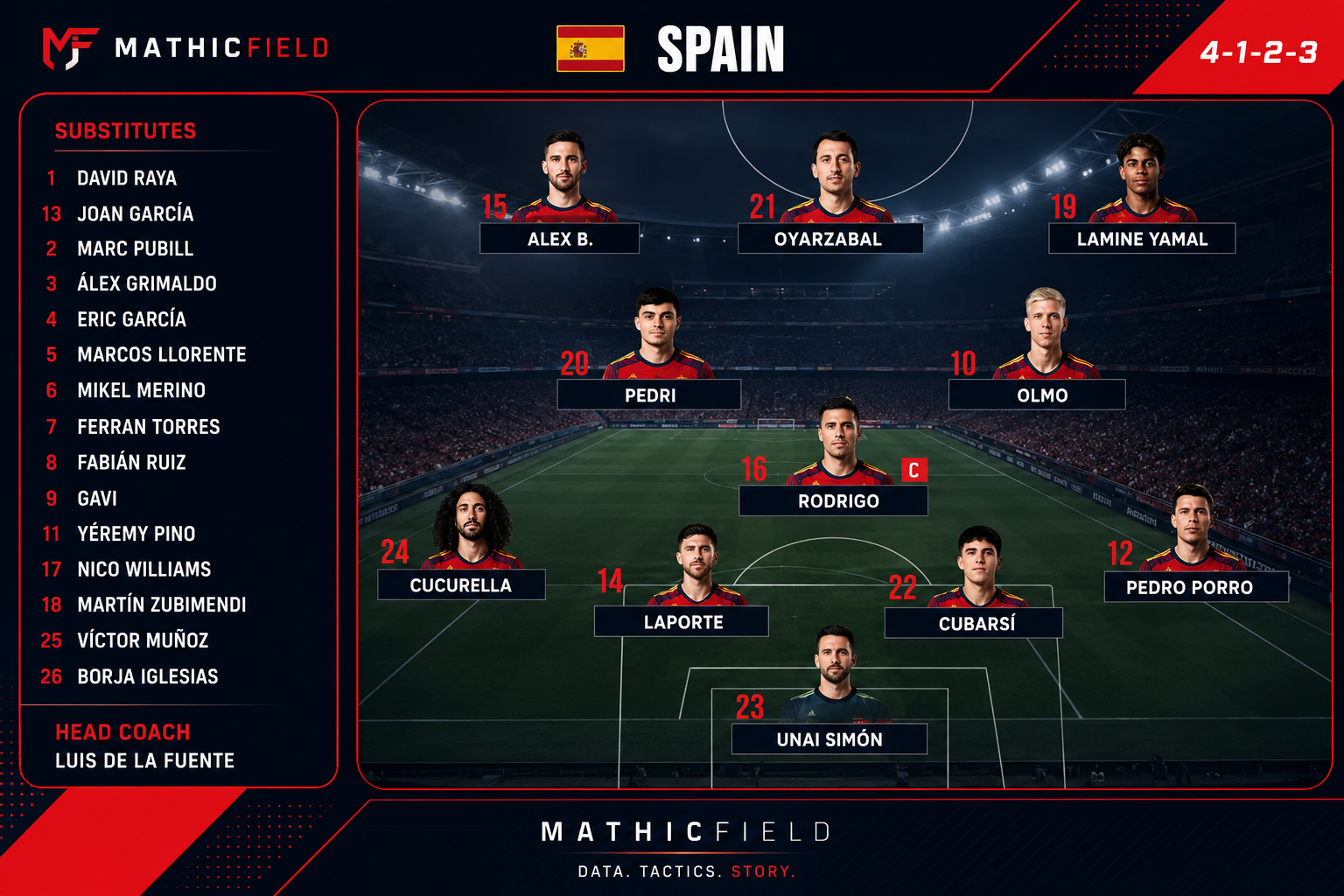
The match between Spain and Portugal delivered a tense and highly competitive football story. Spain entered the game with a clear intention to control the rhythm through midfield circulation, compact positioning, and patient attacking sequences. Portugal, meanwhile, tried to stay balanced in their 4-2-3-1 structure, using midfield protection and wide outlets to create moments of progression.
Spain’s winning goal changed the emotional direction of the match. Once Spain moved ahead, Portugal were forced to increase their attacking urgency. That created more space, but it also made the game more dangerous for them. Spain did not panic after scoring. Instead, they managed the tempo, protected central areas, and forced Portugal to attack from less dangerous zones.
Portugal had moments where they looked capable of building pressure. Their attacking players tried to combine between the lines, and their wide players attempted to stretch Spain’s defensive block. However, Spain’s defensive structure remained calm. They closed passing lanes, protected the penalty area, and limited Portugal’s clean shooting opportunities.
The match was not dominated by chaos. It was decided by small margins. Spain showed more clarity in the key moments, while Portugal struggled to convert possession and territory into decisive attacking actions. In knockout football, that difference matters. One goal, one sequence, and one controlled defensive performance were enough to separate the two sides.
Tactical Analysis
Spain’s tactical approach was based on control. They wanted to manage the ball, slow down Portugal’s transitions, and create overloads in midfield. Their structure allowed them to move the ball with patience rather than forcing early attacks. This helped Spain reduce the risk of losing possession in dangerous areas.
Portugal’s 4-2-3-1 shape gave them defensive cover, especially in central midfield. The two deeper midfielders helped screen Spain’s forward passes, while the attacking midfield line tried to support quick counters. However, Portugal often lacked the final connection between midfield and attack. Their build-up reached advanced areas, but the last pass was not sharp enough.
Spain’s biggest advantage came from their ability to control central spaces. They did not always need to attack quickly. Instead, they moved Portugal side to side, waited for gaps to appear, and used movement between the lines to create uncertainty. This forced Portugal’s midfield to constantly adjust their positioning.
Portugal tried to respond through wide attacks. They looked for space outside Spain’s compact midfield block, hoping to create crossing situations or one-v-one moments. But Spain’s full-backs and midfield support reacted quickly. Whenever Portugal tried to attack down the flank, Spain often doubled up, blocked the forward route, and forced the ball backward.
The tactical battle became even clearer after Spain scored. Portugal needed more risk, while Spain could become more selective. Spain did not completely sit deep, but they became more calculated. Their pressing moments were chosen carefully, and their defensive line stayed connected. That balance helped them protect the lead without losing their identity.
This was a mature performance from Spain. It was not only about possession. It was about understanding when to accelerate, when to hold the ball, when to press, and when to protect the result. Portugal had individual quality, but Spain had the stronger collective rhythm.
Key Turning Points
The first major turning point was Spain’s goal. That moment changed the match from a balanced tactical contest into a game where Portugal had to chase. Before the goal, both teams were measuring each other carefully. After the goal, Portugal had to step forward, and that gave Spain more opportunities to control the emotional rhythm of the game.
The second turning point was Spain’s reaction after scoring. Many teams lose structure after taking the lead because they become too defensive or too nervous. Spain avoided that mistake. They continued to pass with purpose, stayed compact without the ball, and made Portugal work hard for every attacking entry.
The third turning point came in the final phase of the match. Portugal pushed for an equalizer, but Spain’s defensive block remained disciplined. The spaces around the box were protected, the midfield stayed aggressive in second-ball situations, and Portugal were forced into lower-quality attacking attempts.
These moments showed why Spain won. They did not only find the goal. They managed the match after finding it. In tournament football, game management is often as important as attacking quality.
Player Performances
Spain’s midfield was central to the result. Their ability to keep the ball under pressure helped Spain avoid long periods of defensive stress. The midfield did not only pass the ball; it controlled the tempo of the game. That control prevented Portugal from building sustained momentum.
Spain’s defensive players also deserve credit. Portugal had dangerous names on the pitch, but Spain’s back line stayed organized. The defenders communicated well, tracked runners, and avoided unnecessary gaps between the lines. Their concentration was especially important in the final minutes.
Portugal’s attacking players had flashes of quality, but they struggled to find clean space. Spain limited their time on the ball and forced them into rushed decisions. Portugal’s midfield worked hard to recover possession and start attacks, but the final third lacked accuracy.
The Spanish goalkeeper and defensive unit helped protect the clean sheet, while the attacking players gave Spain the decisive moment. For more individual breakdowns from this match and other fixtures, visit our Player Analysis section.
Statistics That Matter
The most important statistic in this match was the scoreline: Spain 1, Portugal 0. But behind that result was a wider tactical picture. Spain’s ability to protect dangerous zones after scoring was just as important as the goal itself.
Portugal may have had moments of possession and pressure, but Spain controlled the quality of those moments. Portugal were often pushed wide or forced to restart attacks. That reduced their ability to create clear central chances.
Spain’s passing rhythm helped them manage the match. They did not need to attack every time they had the ball. Sometimes their possession was defensive, used to remove pressure and reset the tempo. That is an important part of tournament football: possession is not only for attack, it is also for control.
Portugal needed more speed in the final third. Their attacks often slowed when they reached Spain’s defensive shape. Without quick combinations or sharp movement behind the line, Spain were able to reset and defend with numbers.
What This Means for the Tournament
Spain’s 1-0 victory strengthens their tournament momentum. A narrow win in a high-pressure match can be more valuable than a comfortable result because it proves the team can survive difficult moments. Spain showed they can win with control, discipline, and emotional maturity.
For Portugal, the defeat raises questions about attacking efficiency. They had enough individual quality to compete, but knockout matches punish hesitation. Portugal needed more clarity in the final third and more variety when Spain blocked central spaces.
This result also changes the wider tournament picture. Spain move forward with confidence, while Portugal leave with the feeling that the match was close but not decisive in their favor. Small tactical details made the difference. For the wider tournament picture, follow our Standing Impact section.
Mathic Field Verdict
Spain did not need to dominate every statistic to deserve victory. They needed to control the right moments, protect the right spaces, and take the right chance. That is exactly what they did.
Portugal remained competitive, but Spain had the clearer match identity. Their structure after scoring was disciplined, their midfield management was mature, and their defensive concentration helped close the match without losing control.
At Mathic Field, this victory looks like a tactical win built on patience, timing, and collective discipline. Spain were not only the team that scored. They were the team that understood the match better.
Continue Your Analysis
Explore more football intelligence in Match Analysis, individual breakdowns in Player Analysis, officiating angles in Referee Analysis, tournament updates in Standing Impact, or return to Mathic Field Home.